Planting Style Guide
Plants don’t just fill space; they are the artistic tools that create privacy, define depth, form the feel, and guide your eye throughout your outdoor rooms.

How we use plants to control what you see and how private you feel.
Use tall, dense shrubs and narrow, columnar trees as “living screens.” Strategically placed near seating areas or property lines, these create total seclusion and act as the walls of your outdoor room, making the space feel intimate and tucked away.


By planting in three tiers—tall in the back, medium in the middle, and low in the front—we add immense visual depth. This “layering” makes even a small yard feel larger and more complex, smoothly transitioning the eye from your flat patio to the edge of the property.


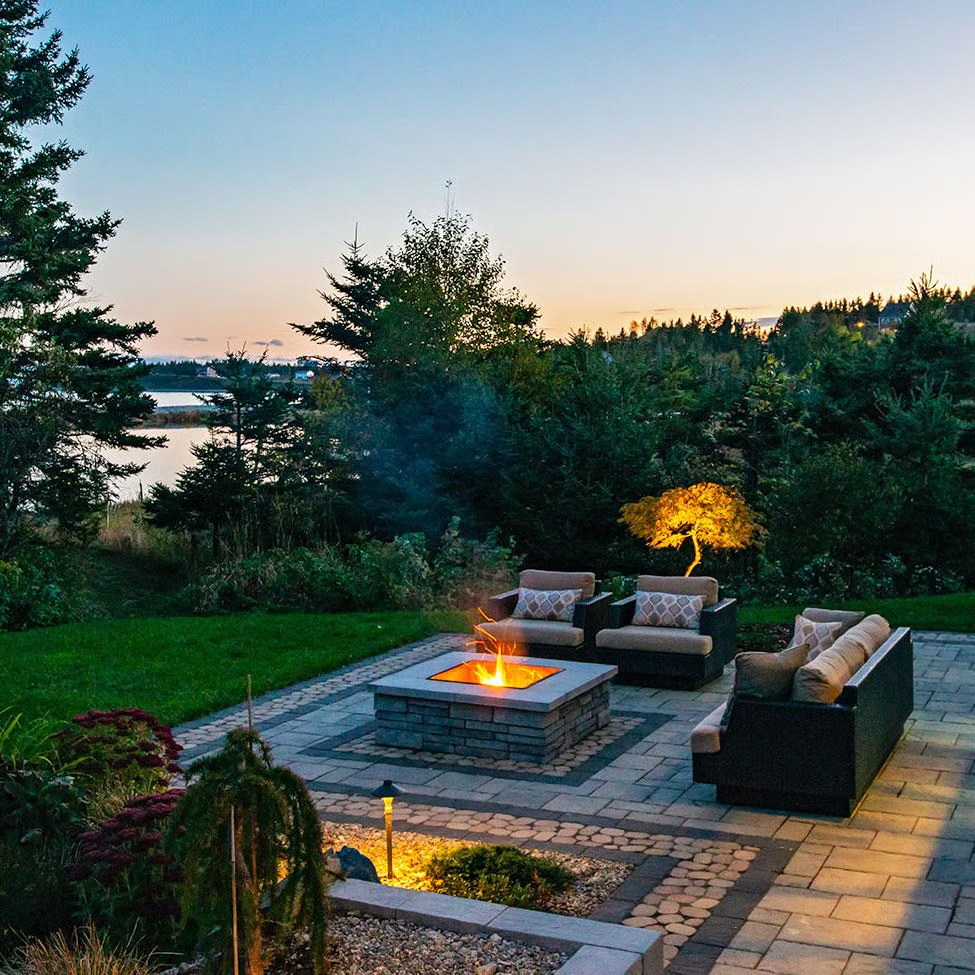
In areas where you have a beautiful view (like a water feature or a sunset), we use low, spreading plants in the foreground. This frames the view like a window (or from an actual window), keeping your sightline completely uninterrupted while still adding greenery to the base.



How the plants are arranged and the formality they bring to the yard.
Plant in groups (3, 5, or 7) and use large “sweeps” or “drifts” of the same plant. This creates a powerful, professional look that lets the eye rest on large sections of similar vegetation and colour. It also shades out weeds and promotes healthier growth by covering the soil completely in areas.


If you prefer a more “untamed” look, we place more single specimens randomly throughout the yard. This mix of colors, heights, and textures feels more organic, disorganized, and beautifully wild—mimicking a natural meadow.


You decide how much “breathing room” the plants have. We can go for a Full look where plants touch and cover the ground, a Pockets style with clusters of plants separated by empty space, or Even Spacing for a very tidy, deliberate look.


Choose between Clean shaped plants that stay uniform, neat, and can be pruned to perfect sizing, or a more Wild plant palette that grows into natural, less-manicured shapes for a softer, more relaxed feel.


Conifers or Evergreens keep their leaves (needles) all year round and provide year round greenery while deciduous or leafy plants lose their leaves in the fall and have a softer look to them. Softness refers to the overall texture of a plant and can be larger leafed plants and softer foliage that drapes vs. smaller leafed plants and spinier fine textures like grasses or evergreens to create different looks.


This is the “best of all worlds” option where we tailor the style to specific locations because you like multiple form and shape style. We might use Clean Shapes and Soft Foliage near your patio to keep things neat and touchable, while transitioning to Wild Shapes and Massing near a water feature for a natural feel. We can even use Spikier, Finer Textures on the property borders to create a crisp boundary while keeping the plants near your seating areas lush and inviting.


The emotional impact of your garden’s color palette.
High energy and excitement! We use “complementary” colors—like placing bright yellows next to deep purples. This contrast creates a vibrant, alive feeling that can be put into overdrive by putting in lots of different colours.


Peace and relaxation. We use a restrained palette, such as multiple shades of green paired with soft whites and purples. This is less “visually loud” and perfect for a quiet sanctuary. Choose 1 or 2 colours that are complimentary rather than contrasting and consistently implement those colours and shades everywhere.


Pure nature. This style focuses almost entirely on various shades and textures of green. It creates a deep, “forest-like” feeling that feels very cooling and connected to the natural world.

The customized approach. We can make your front entry Dynamic and exciting for guests, while keeping your private back patio Calm and Lush for your own relaxation


Monotone, Greens, Colourful, Calm
Fill Out Your Contact Info And Hit Submit To Get Your Choices Emailed To You
"*" indicates required fields
OR

